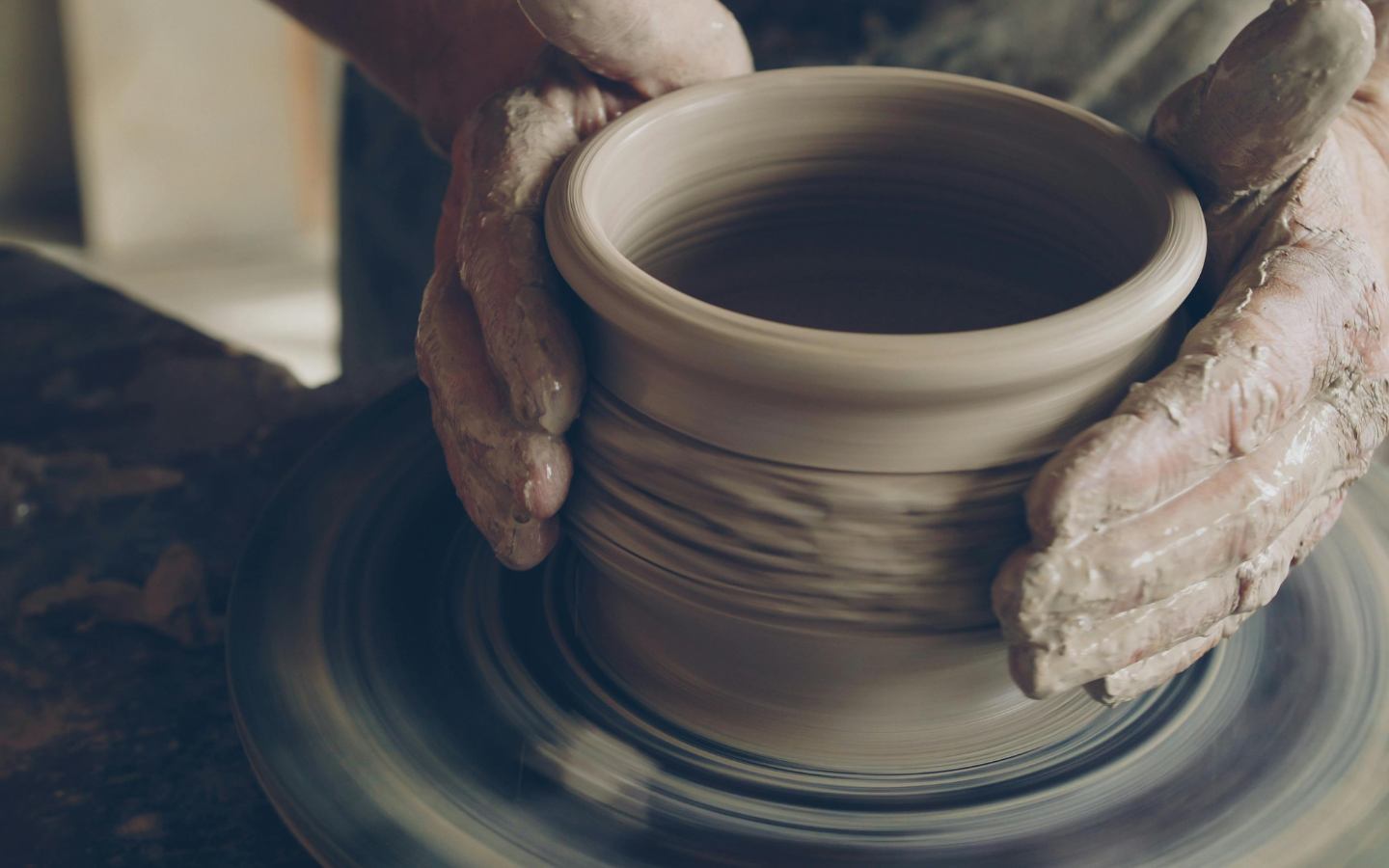

There is a particular kind of humility that hits you the first time you sit down at a pottery wheel. You have seen it done — on screens, in studios, maybe in someone’s home — and it looks almost meditative. Fluid. Easy, even. Then you press your hands into a spinning mound of clay and realize, very quickly, that your hands have no idea what they are doing. The clay wobbles. It lists. It collapses in slow, dignified defeat. And yet somehow, after a few hours with the right teacher, something resembling a bowl emerges. That feeling is the beginning of a relationship with craft that most people carry for the rest of their lives.
Bob Deane has been that teacher for many first-time students at his studio in Media, Pennsylvania. His pottery classes open the studio — and the wheel — to anyone curious about working with clay, regardless of experience. What they offer is not just a technique but a perspective: a way of understanding what it actually takes to make the objects that end up on our tables and in our hands every day.
The Wheel Teaches Patience You Did Not Know You Needed
Centering clay on a wheel — the essential first step in throwing — requires an unusual combination of strength, sensitivity, and stillness. You push against the clay with your whole body, and the clay pushes back. Too much force and it distorts; too little and it wanders. The wheel does not reward impatience or tension. It rewards presence. Most students find, somewhere in their first session, that their mind quiets in a way it rarely does during a typical day. This is not a small thing.
Bob works with a clay rooted in the local Pennsylvania landscape — much of it hand-dug from regional creek beds, a practice that gives his stoneware pottery a genuine sense of place. Working with that same material in a class is a way of connecting not just to a craft but to the land it comes from. Creek clay has its own character: it responds differently than commercial clay, and learning to read that response is part of what makes Bob’s studio a distinctive place to learn.
You Start Looking at Pots Differently
One of the quieter effects of learning to throw is that it permanently changes how you look at handmade objects. Once you understand what it takes to center, open, pull, and finish a wall — let alone apply a glaze and fire it — you stop taking these things for granted. A handmade mug is no longer just a vessel. It becomes a record of decisions: how thick the wall was pulled, where the handle was attached, what the kiln did to the glaze. You start noticing the small marks of the hand that mass production erases. You start wanting to know who made the things you use.
That shift in attention is one of the most lasting gifts a pottery class can give. It cultivates what the writer and designer David Pye once called the ‘workmanship of risk’ — an appreciation for making that accepts imperfection as the signature of genuine craft. Bob Deane’s sculptural work and sculptural pods and bases are excellent examples of what that long-term mastery looks like: forms that carry the confidence of a maker who has thrown thousands of pots and knows exactly when to follow the clay and when to lead it.
From Student to Collector
Many people who come to Bob’s studio for a class leave with more than a bowl they made themselves. They leave with a new way of seeing, and often with a new appreciation for the pieces that already populate his shelves. Understanding the process makes you a better collector — not in the sense of acquiring more, but in the sense of choosing more deliberately, and valuing what you choose.
If you have been curious about pottery — whether as a practice, a creative outlet, or simply a way to spend a few hours away from a screen — a class at Bob Deane’s Media studio is one of the better decisions you can make. Read more about the philosophy behind the work in his Artist Statement, and come ready to get your hands dirty.