
Think for a moment about the oldest object in your kitchen. Not the most expensive — the oldest. The cast iron pan passed down from a grandparent, perhaps. A mixing bowl that has been in the family since before you were born. A coffee cup you inherited without quite knowing when or from whom. These objects carry something that newly purchased things do not: a residue of time and use that makes them feel different in the hand, heavier in a way that has nothing to do with weight. They have been somewhere. They have meant something.
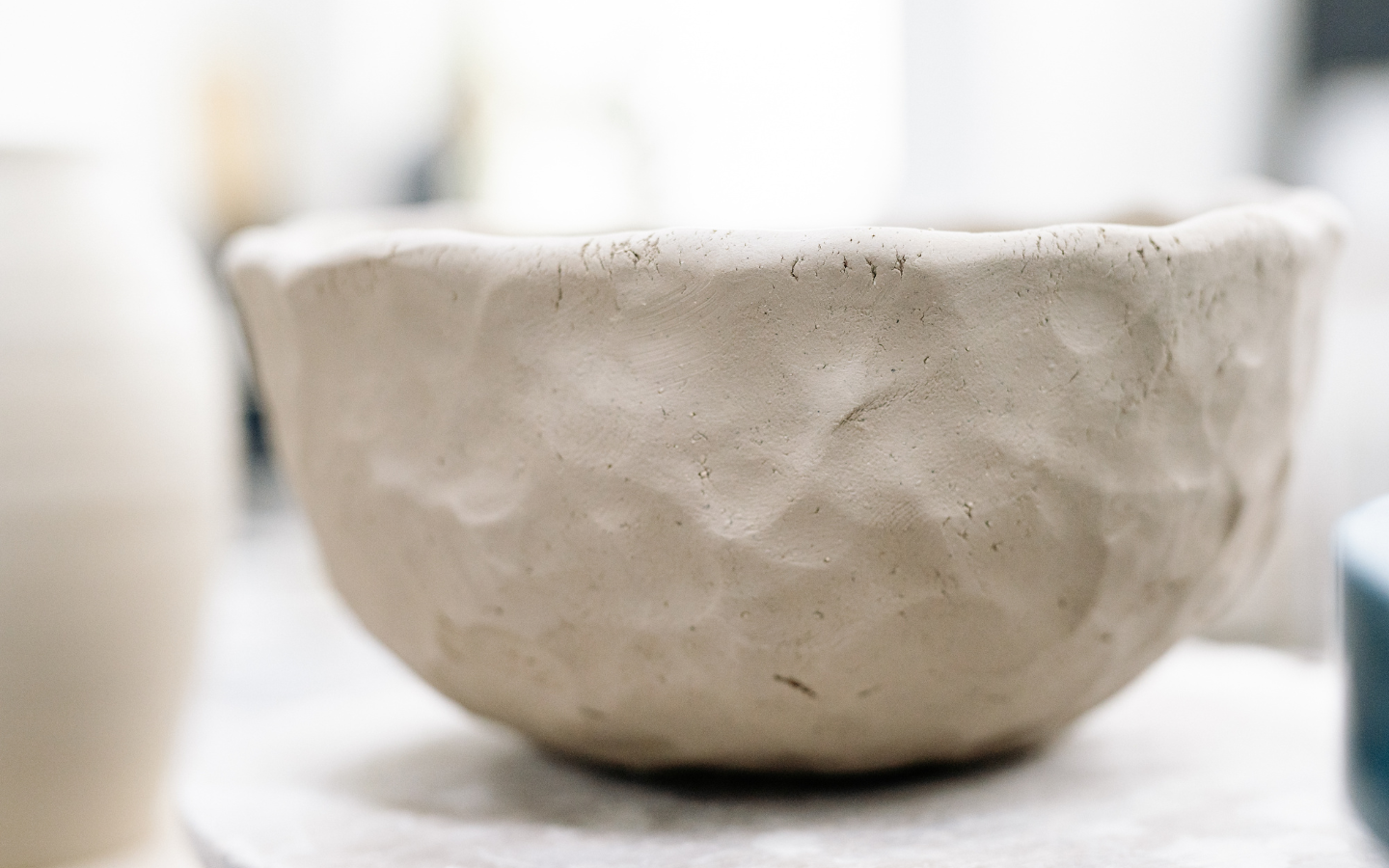
Handmade stoneware is one of the very few categories of kitchen object that can genuinely aspire to that status from the day it is made. And the pieces produced by Bob Deane at his creek clay pottery studio in Media, Pennsylvania are perhaps the clearest example of why. They are not made to last a few years until something better comes along. They are made — materially, structurally, philosophically — to last a lifetime. Probably longer.
What Makes Stoneware Built to Endure
The durability of high-fired stoneware is not incidental to its character — it is a direct consequence of how it is made. Bob Deane fires his work in a gas kiln at temperatures that vitrify the clay body: a process that fuses the clay particles into a dense, non-porous matrix that is resistant to chipping, crazing, and moisture absorption in a way that lower-fired earthenware and commercial ceramics simply are not.
The glazes that coat his stoneware pottery are similarly transformed in the firing — fully melted and bonded to the clay surface at temperatures where they become, effectively, glass. They do not wear off. They do not dull. A well-made high-fired glaze looks the same after a thousand wash cycles as it does the day it leaves the kiln. This is not a promise you will find on the tag of a department store plate, because it is not a promise a department store plate can keep.
The Object That Accumulates Meaning
Durability alone does not make something an heirloom. What makes an object worth keeping across generations is the quality of the original investment — in craft, in material, in the attention given to every decision. A handmade mug that was thrown with care, fitted with a handle refined across hundreds of iterations, glazed in colours drawn from the Pennsylvania landscape, and fired over twelve careful hours in a gas kiln carries a quality of making that announces itself without explanation. You feel it when you pick it up. You notice it when the light catches the glaze. Other people notice it too.
These are the objects that accumulate meaning through use rather than losing it. The mug that became the favourite without anyone deciding it would. The serving bowl that appears at every Thanksgiving because no one can imagine a different one. The pitcher that sits on the counter rather than in the cupboard because it is too good-looking to put away. Bob Deane’s pieces tend to find these roles in the households they enter, quietly becoming indispensable in the way that only genuinely good things do.
Choosing for the Long Term
Heirloom thinking is ultimately a discipline of attention: it asks you to consider not what you want right now but what you will still want in twenty years, and what the person who inherits it might value in forty. Applied to pottery, it leads you fairly quickly toward the handmade and away from the mass-produced — not for sentimental reasons but for practical ones. Things made with skill, from good materials, by someone who understands their craft, simply last longer and age better than things assembled for a price point.
Bob Deane’s sculptural work and sculptural pods and bases carry this quality especially strongly — objects that exist at the intersection of function and art, and that hold their ground as both across decades. Read more about the values that drive every piece in his Artist Statement, or come and learn the craft yourself through his pottery classes in Media, PA. Buy for now. Choose for always.