
There is a question that serious craft has wrestled with for generations: at what point does a functional object stop being craft and become art? When does a pot transcend its purpose and begin to do something else entirely — to hold not soup or soil but ideas, emotion, or a quality of attention that stops you mid-step and makes you look? Bob Deane works precisely at that boundary, and it is one of the most interesting places in contemporary ceramics to be.
Most visitors to Bob Deane’s pottery studio in Media, Pennsylvania first arrive through the functional work — the mugs, the bowls, the serving pieces that make his name as a craftsman. But spend time exploring his sculptural work and something shifts. The forms become stranger, more personal, more insistent. They are not asking to be filled. They are asking to be looked at.
Form Without Function — Or Function of a Different Kind
The conventional way to distinguish craft from fine art is utility: craft serves a purpose; art does not. But this framework has always been too simple, and Bob Deane’s sculptural pieces expose its limits. A tall, hand-built vessel with a textured surface and an asymmetric rim may hold nothing you could pour out — and yet it does something. It organises the space around it. It invites your eye to travel its surface. It makes the shelf or table it sits on feel more considered, more alive.
This is the function of a different kind that the best craft sculpture performs: not the function of the container but the function of the presence. His sculptural pods and bases are among the most compelling examples of this. Compact, tactile, and richly glazed, they feel as though they were found rather than made — as if the earth that supplied the clay also supplied the form, and Bob simply clarified it. They are the kind of objects people pick up without thinking, turn in their hands, and set down reluctantly.
The Clay Remembers Where It Came From
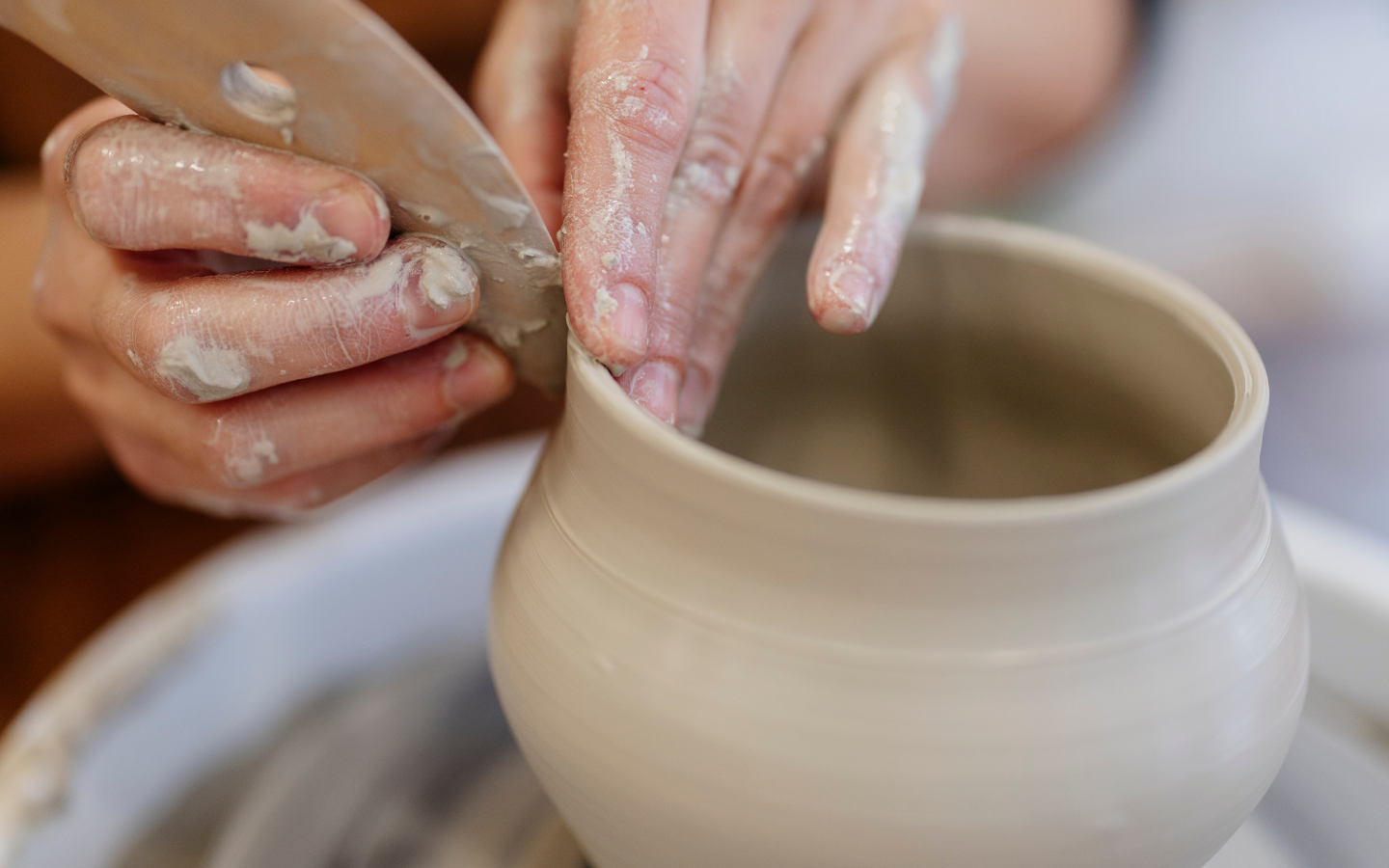
What gives Bob’s sculptural work its particular authority is the same thing that grounds his functional stoneware pottery: the clay itself. Much of his material is hand-dug from local Pennsylvania creek beds — a practice that connects every piece, functional or sculptural, to a specific landscape. When you look at a Bob Deane sculpture, you are looking at something that was, not long ago, sediment in a Pennsylvania stream. That knowledge does not make it more beautiful, exactly. But it makes it more true. And in craft, truth has a way of producing beauty on its own terms.
The gas kiln amplifies this. The atmospheric firing process that gives Bob’s glazes their depth and variation is no less dramatic in his sculptural pieces — arguably more so, because without the demands of function to balance, he can push glaze and surface further. A sculptural form can carry a more complex glaze treatment, a bolder texture, a stranger silhouette, without any of it undermining its purpose. The purpose is the thing itself.
Collecting Sculptural Pottery: A Different Kind of Investment
There is a growing appetite among collectors and interiors-minded buyers for works that sit between the categories — not quite a painting, not quite a vase, but something that brings the handmade and the contemplative into a living space without requiring a gallery wall or a pedestal. Bob Deane’s sculptural pieces fit this impulse perfectly. They are scaled for real homes, priced for real collectors, and made from real Pennsylvania earth.
Whether you come to them as a collector, a lover of craft, or simply someone looking for an object with genuine presence for a shelf or a table, his sculptural work offers a way into serious ceramics that does not require any specialised knowledge — only the willingness to look closely and respond honestly. Explore the full range at his sculptural work gallery, discover his pottery classes if you want to understand the process from the inside, or read his Artist Statement for the thinking behind thirty years of working with creek clay.